

The Power of Compounding: Why Time Matters When You Invest
One of the most powerful concepts in investing is also one of the simplest: compounding.
Compounding is the process where the returns generated by your investments are reinvested, allowing those returns to potentially generate further returns over time.
It is sometimes described as a snowball effect. The longer the snowball rolls, the more opportunity it has to grow.
Your money can work for you
Imagine investing regularly and allowing your investment returns to remain invested.
Initially, the growth may appear relatively modest. But over time, the returns can begin contributing to further growth. This means that the potential growth of your investment isn't only coming from the money you contribute — it can also come from the returns generated along the way.
This is why time can be one of an investor's greatest advantages.
A simple example
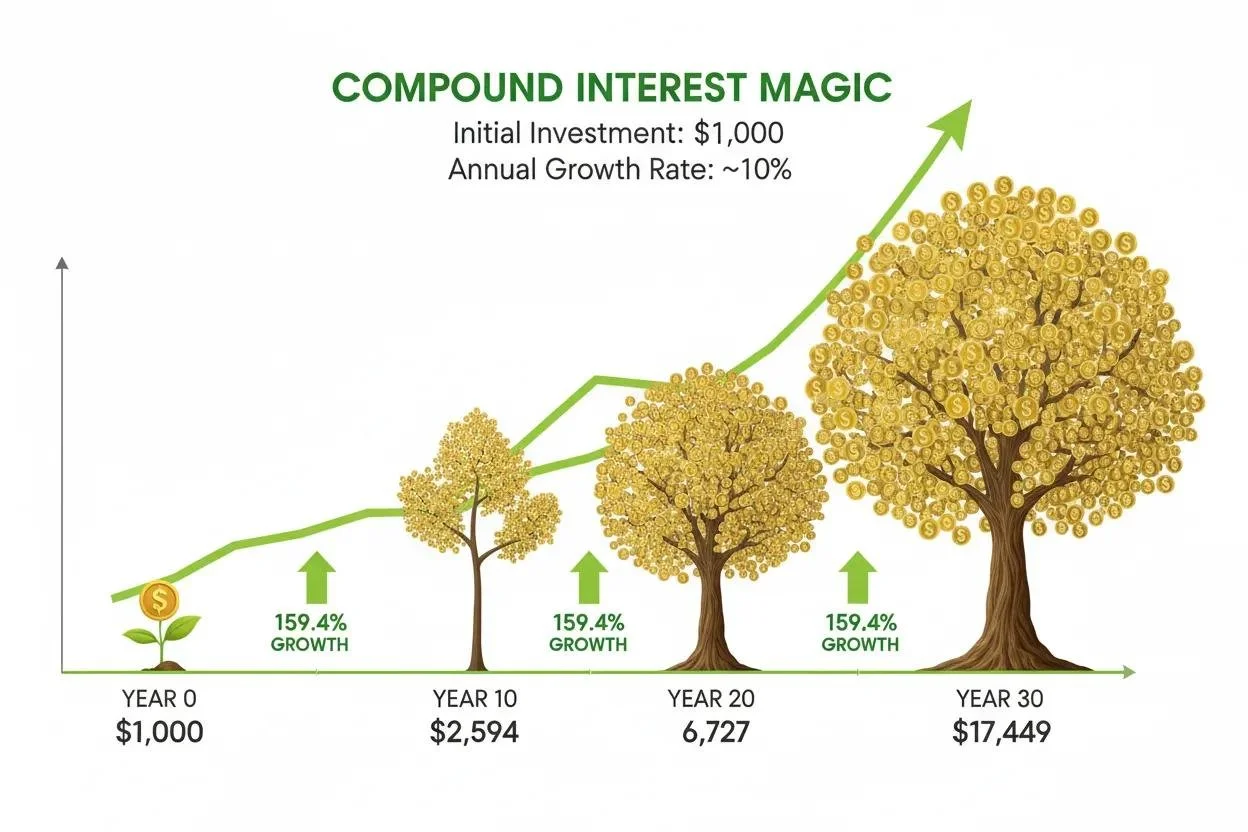
Suppose you invest $1,000 each month for 20 years.
Your total contributions would be:
$1,000 × 12 months × 20 years = $240,000
If the investment achieved an average return of 4% per year, with returns compounded monthly, the investment could grow to approximately $366,774.
That means approximately $126,774 of the final value would come from investment growth, rather than your direct contributions.
Of course, this is a hypothetical illustration. Investment returns are not guaranteed and actual returns will fluctuate from year to year.
The importance of starting early
Compounding becomes particularly powerful over longer periods.
Consider two investors:
Investor A starts investing at age 25 and contributes regularly for 10 years before stopping. Their existing investment is then left invested.
Investor B starts at age 35 and continues making contributions for the next 30 years.
Even though Investor B contributes for much longer, Investor A has given their money an additional decade to potentially compound.
The lesson isn't that everyone should invest at a particular age or follow a particular strategy.
Rather, it highlights an important principle:
Time gives your investments more opportunity to grow and compound.
But compounding doesn't remove investment risk
It's important to remember that investment growth doesn't happen in a straight line.
Markets rise and fall, and the value of investments can decrease as well as increase. A higher expected return generally comes with greater investment risk.
This is why we believe successful long-term investing isn't simply about chasing the highest possible return.
It's about taking an appropriate level of risk for your goals, timeframe and circumstances.
Diversification can help manage risk
At Investment Matters, we work with you to understand your investment objectives and risk profile before considering an appropriate investment strategy.
Diversified portfolios can spread investments across different asset classes, which may include:
Cash and term deposits
Fixed interest and bonds
New Zealand and international shares
Property
Other diversified investments
Diversification doesn't eliminate investment risk or guarantee positive returns. However, spreading investments across different assets and markets can help reduce reliance on the performance of any one investment or market.
The long-term investor mindset
Compounding rewards patience and consistency.
Rather than focusing solely on what markets are doing this week or this month, long-term investors can benefit from keeping sight of the bigger picture.
Regular investing, remaining appropriately diversified and giving your investments time to grow can all play an important role in building long-term wealth.
The earlier you start, the more time you potentially give compounding to work — but it's never simply about starting early. It's about having a strategy that is appropriate for you and staying invested through the inevitable ups and downs of markets.
The Investment Matters takeaway
Compounding is powerful, but time is what gives it the opportunity to work.
There are no guaranteed returns, and markets will experience periods of volatility. The key is to understand how much investment risk is appropriate for you, build a diversified strategy around your goals, and give your investments sufficient time to potentially grow.
Small, consistent steps over a long period can make a meaningful difference.
This article is for general information and education only and does not constitute personalised financial advice. Investment returns are not guaranteed and the value of investments can rise and fall. The appropriateness of any investment strategy depends on your individual objectives, financial situation and needs. We recommend obtaining personalised financial advice before making investment decisions.